

Selfish is the New Cute
Each of the Chosen Children had some sort of personal obstacle to overcome in order to properly obtain their crest and allow their Digimon to evolve further. Taichi, bearer of the Crest of Courage, struggled to step up as a proper leader. Yamato, bearer of the Crest of Friendship, had difficulty maintaining his friendships. Hikari was susceptible to darkness. Takeru needed to keep his hope unwavering. For Mimi, “selfishness” is what puts her at constant odds of her questioning whether or not she is deserving of the crest of purity. Yet, how can someone who loves her friends so much, who doesn’t seem to have a malicious bone in her body, could even be accused as such?

To begin, Japanese culture is deeply rooted in self-sacrifice, and being selfish doesn’t necessarily carry the same connotation as it does in English. During my first few months of living in Japan, one of my responsibilities was to correct and edit speeches for competitions that students participated in. One I received was titled “I Want To Be Selfish,” written by a 3rd year female middle school student. I thought that it was a rather odd title, and after reading the content, it didn’t seem appropriate to name it that, either. She talked about wanting to go home and eat whatever she wanted, wear what she wanted. She wanted to be at the top of her class, wanted to get into a good school, wanted a nice boyfriend, wanted to be the best person she could be. It didn’t seem selfish at all. If anything, it felt empowering to want all these nice things she was willing to work hard for.
I explained to the head English teacher in charge that it didn’t quite reflect the idea the student wanted to convey, in hopes to try and get it changed to something else. He defended the title, saying that it conveyed a “cute” part of this hard-working, perfect-score student. Still, l pointed out that the word “selfish” normally has a negative connotation in English. Then, he asked me if I knew what meiwaku meant, and I instantly figured out why he thought the title was appropriate. (The answer? Simply a diffrence in culture.)
If "selfishness" is the unintended byproduct of liberty, Japan teaches selflessness without any respect for liberty. By far, preserving social cohesion and tradition are more important values.--Eryk Salvaggio, This Japanese Life
Meiwaku, though difficult to translate, means “annoyance” or “nuisance” among many other words. It, essentially, means to disrupt the harmonious social peace and order, no matter if the action was an accident or its intent innocent. Lots of situations quality as causing meiwaku, from being a jerk in public to taking more than 10 seconds to pay your fare on the bus. What the teacher implied was that a girl wanting the perfect life and future—to be perfectly happy—was an unrealistic and a selfish thing to ask of this world. It may have been endearing, but it was still selfish, according to society.
mei-: ‘astray’; -waku: ‘beguile’
So, how exactly does this idea apply to Mimi? Wagamama is the normal term that identifies someone as being selfish; however, Mimi is described something way worse than that in Digimon Adventure Tri.; she is accused of being jikochuu, which is more like “self-centered” or “egocentric”.
ji-: ‘oneself’; -ko-: ‘self’; -chuu: ‘center’
(Side note: Using two kanji to represent the self/individual makes even this itself word super-duper egotistical.)
Mimi gets called this on two instances. The first is when she attempts to jump the gun on some of the decisions that should be made collectively during her stint as a member of her school’s culture festival committee. The girls on the commitee are not exactly happy with Mimi's assertiveness, and instead try to passive-agressively talk smack about her within earshot of Mimi (and Mimi had none of that; she went up the them and told them to say it to her face). The second time is when she tries to show off to TV reporters the prowess of the Digimon by jumping haphazardly into battle without thinking it would endanger those around her. Yes, it’s not wrong to wait around and make a decision ahead of time, and yes, defeating evil should be applauded. But because of her err, it got the team into a heap of trouble, with Koushiro berating her for it like a jerk. Though Mimi’s intentions were pure and honest, what made it a wrongding was simply the fact that she wanted to move forward without first addressing the collective and coming to an agreement.
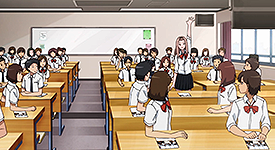

Am I jikochuu? ....I did know on some level. These past couple days I was made painfully aware. When something feels right, or I think something is good, I act like it's good for everyone else too. But ultimately, I'm not seeing those around me. It ends up making them feel bad.... I'm sick of myself.--Mimi, Digimon Adventure tri.: Determination
So, does this make it wrong, then? Why does Mimi get dismissed and berated for trying to step up to the forefront, yet some of her male peers, like Taichi or Koushiro (the up-and-coming assertive decision-makers), get a pass? Am I, in some manner, calling out Toei Animation on their sexist bullshit? (It’s cool, you don’t have to answer that.)
But here’s the kicker: Mimi doesn’t actually care. She expresses her opinions regardless of what others will think of her. She does things regardless of what collectivist Japanese society expects of her. She has always been expressive, and I myself like to think that that trait of hers inflated after all of those years living in America, an individualistic society. In fact, there is some hint to this during the second tri. movie: Meiko expresses surprise at Mimi being a kikokushijo (帰国子女), or returnee. On the surface, this reference may seem a little out of place. But--you guessed it--there's definitely more to it! Returnees, especially children who spent some of their formative years abroad, often struggle to re-integrate back into Japanese society. In fact, it's been a thing in Japan for several decades. Mimi's status is as a kikokushijo makes her a special case that is very rarely played out in typical anime: Is her struggle in understanding meiwaku elicited by her confusion about her own cultural identity? Very possible, realistically. Heck, she even code-switches between English and Japanese on occassion, and makes errors in Japanese (she tries to call Yamato a tsundere, but mispronounces it multiple times). Although Mimi isn't the most accurate representation of a kikokushijo (the absence of certain subltle anxieties still make her fundamentally Japanese), the movie does a pretty decent attempt at protraying some semblence of biculturality.

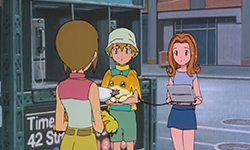
In any case, Mimi’s arc in Digimon Adventure Tri. wraps itself wonderfully in that her peers in the school festival committee, who had accused of her being selfish earlier, actually came back to tell her that she was right all along. Now, after all that, what’s the message? Did Mimi accept her own bicultural identity and leave it at that? The most she did was experience a moment of self-realization, but she didn’t have to back down from being who she was. She just had to push forward, be herself and everything worked out fine.
So, when it comes down to it, cause meiwaku, be wagamama, be jikochuu, be selfish, be cute. Life is too short to be down on the opinions of others, anyway.